
NSGEU Defends Public Liquor Sales in Nova Scotia

*This article appears in the current issue of the Union Stand
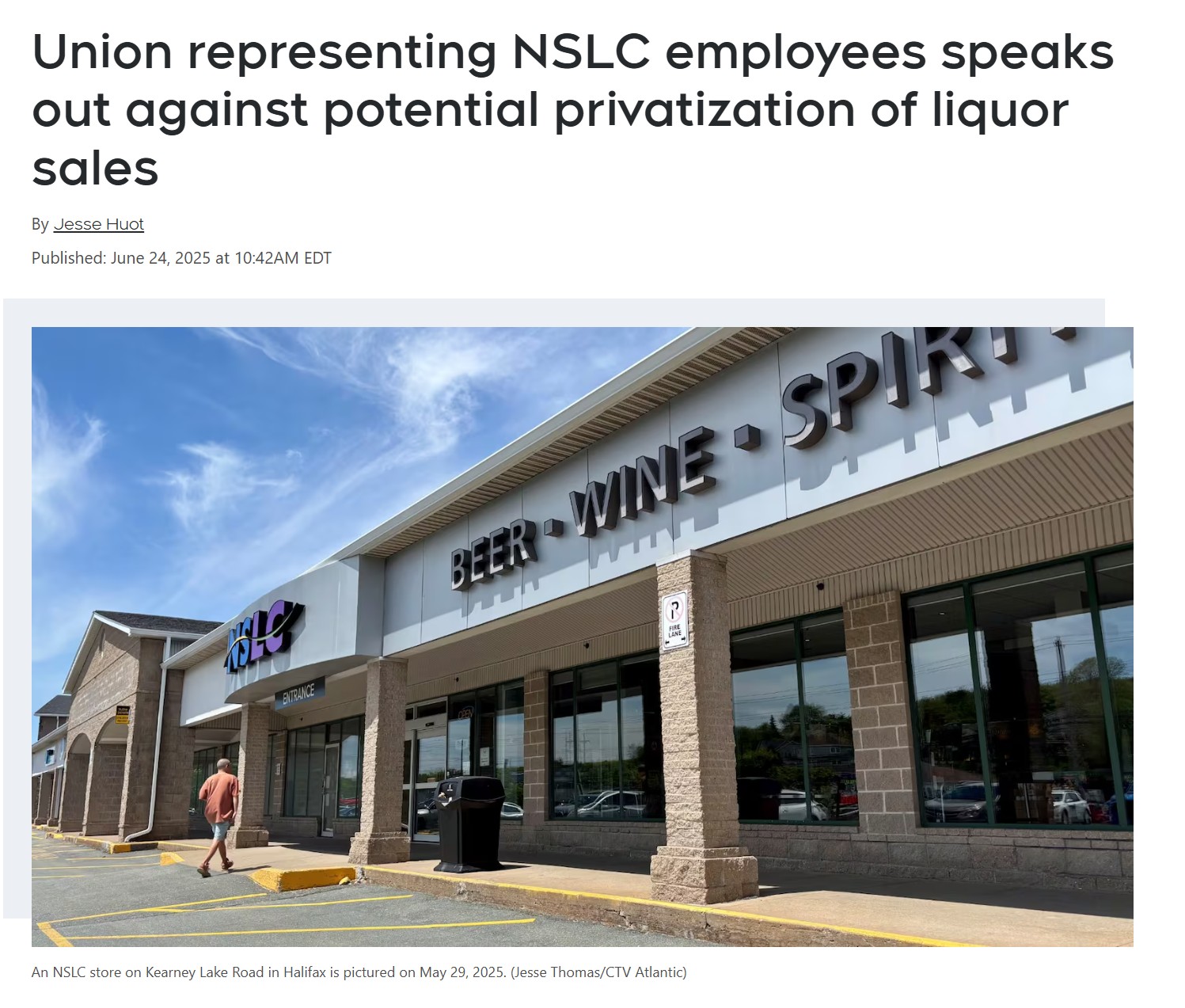
When Premier Houston’s government began exploring expanded alcohol sales in grocery and convenience stores in spring and summer 2025, the NSGEU moved quickly to protect public sector workers.
The proposal was framed as modernization and convenience. But the issue went far beyond where people buy beer or wine. It raised serious concerns about job security, the loss of public revenue, and the shift from responsible public oversight to a model of private profit.
In May 2025, the government launched consultations and polling, pointing to changes in provinces like Ontario. NSGEU responded by launching the “Keep Liquor Sales Public” campaign.
The message was clear: Public Liquor Works for Us. Let’s Keep It That Way. The campaign highlighted the role NSLC workers play in customer service and in upholding social responsibility and protecting communities.
A province-wide radio campaign warned that privatization would drain money from public services, put good jobs at risk, and weaken safeguards. Nova Scotians were urged to “put a cork” in privatization.
The campaign focused on:
• protecting local jobs
• keeping revenue in public hands
• maintaining responsible, publicly controlled sales
The numbers backed it up. In 2024–25, the NSLC returned more than $280 million to the province. That revenue supports healthcare, education, infrastructure, and other essential services.
NSGEU repeatedly made this point: public liquor sales help fund the services people rely on.
The campaign also underscored the NSLC’s strong record on responsible retailing. In 2024–25, workers challenged more than 2.1 million customers for ID and refused nearly 14,000 sales.
President Sandra Mullen reinforced the message in media interviews, noting Nova Scotia already has more than 300 retail outlets and calling the proposal “a solution in search of a problem.”
As consultations unfolded, it became clear the government was facing pressure on many fronts. Public opinion showed it wasn’t a slam dunk, due to dire budgetary predictions in the budget updates, people expressed concerns about the impact on public revenue. Rural MLAs raised concerns about the loss of good-paying jobs in their communities, and local producers worried about being pushed aside by large national retailers. Health and safety advocates and community groups also pushed back, arguing there was already broad access to alcohol and no clear public need to expand sales.
Faced with that pressure—and no clear public consensus, the government backed away from broadening privatization.
The principle at the centre of NSGEU’s campaign was simple: alcohol sales should serve the public interest, not private corporations.
Related Articles
-
October 19, 2026
Province Held To Account for Reckless Bill 148
Province Held To Account for Reckless Bill 148 The labour movement earned an important victory today for the rights of...
-
October 19, 2026
Local 112 – Riverview Enhanced Living Society Bargaining Update, October 19, 2026
Your bargaining committee met with your employer on Wednesday, October 14, to talk about the next steps in bargaining. Once...
-
October 16, 2026
Health Support Services Week, October 19-23
From October 19- 23, we are celebrating Health Support Services Recognition Week. This week is dedicated to recognizing the crucial...
-
October 9, 2026
Happy Thanksgiving
The NSGEU offices are closed for Thanksgiving on Monday, October 12.
-
October 6, 2026
Happy Continuing Care Assistant Week
From October 6-10, we celebrate Continuing Care Assistant (CCA) Week in Nova Scotia. It’s a time to recognize the dedication,...
-
October 2, 2026
President’s Letter
This article is featured in the summer issue of the Union Stand Dear members, As the Nova Scotia government wraps...
-
October 2, 2026
Notes From the Field: President’s Tour Summer Edition
This article is featured in the summer issue of the Union Stand Veith House may look like a typical three-story...
-
October 2, 2026
Union Campaigns Against Houston’s Careless Cuts
This article is featured in the summer issue of the Union Stand In mid-September, the NSGEU rolled out a cheeky...
-
October 2, 2026
Available Now! The Summer Issue of The Stand
The latest issue of The Union Stand is now available online! Click here to view it!